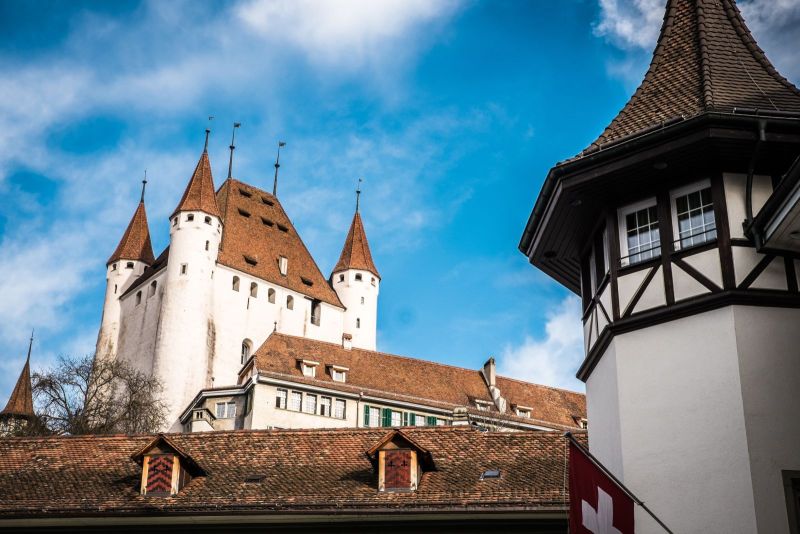
An octagonal tower has watched over Thun's rooftops since 1330.
Flusswelle
Watch surfers ride a standing wave in the middle of town, created by a wooden gate from 1818.
The Aare leaves Lake Thun and almost immediately meets the Scherzligschleuse, a wooden sluice built in 1818 to regulate the lake's water level. The gate's angle does something unplanned: it shapes a standing wave that never moves downstream, always breaking in the same spot. Surfers have used it for years, dropping into the current the way others drop into a set at the coast, except here the wave stays put and the mountains stay in view the whole time.
The lock sits beside Bälliz, the small island that anchors Thun's old town, a few minutes on foot from the station. No booking, no entrance fee. People gather along the railing to watch, coffee in hand, the water doing the same thing it has done every day since the gates were last adjusted. A short walk covers the whole scene: castle above, river below, one wave holding its shape between them.