Valais Sion
Sion
Plan your trip
A handcrafted itinerary for Sion.
SleepFind your stay
A short, curated list. None of them a chain.
GuidesFollow a route
Hand-curated, walked before written.
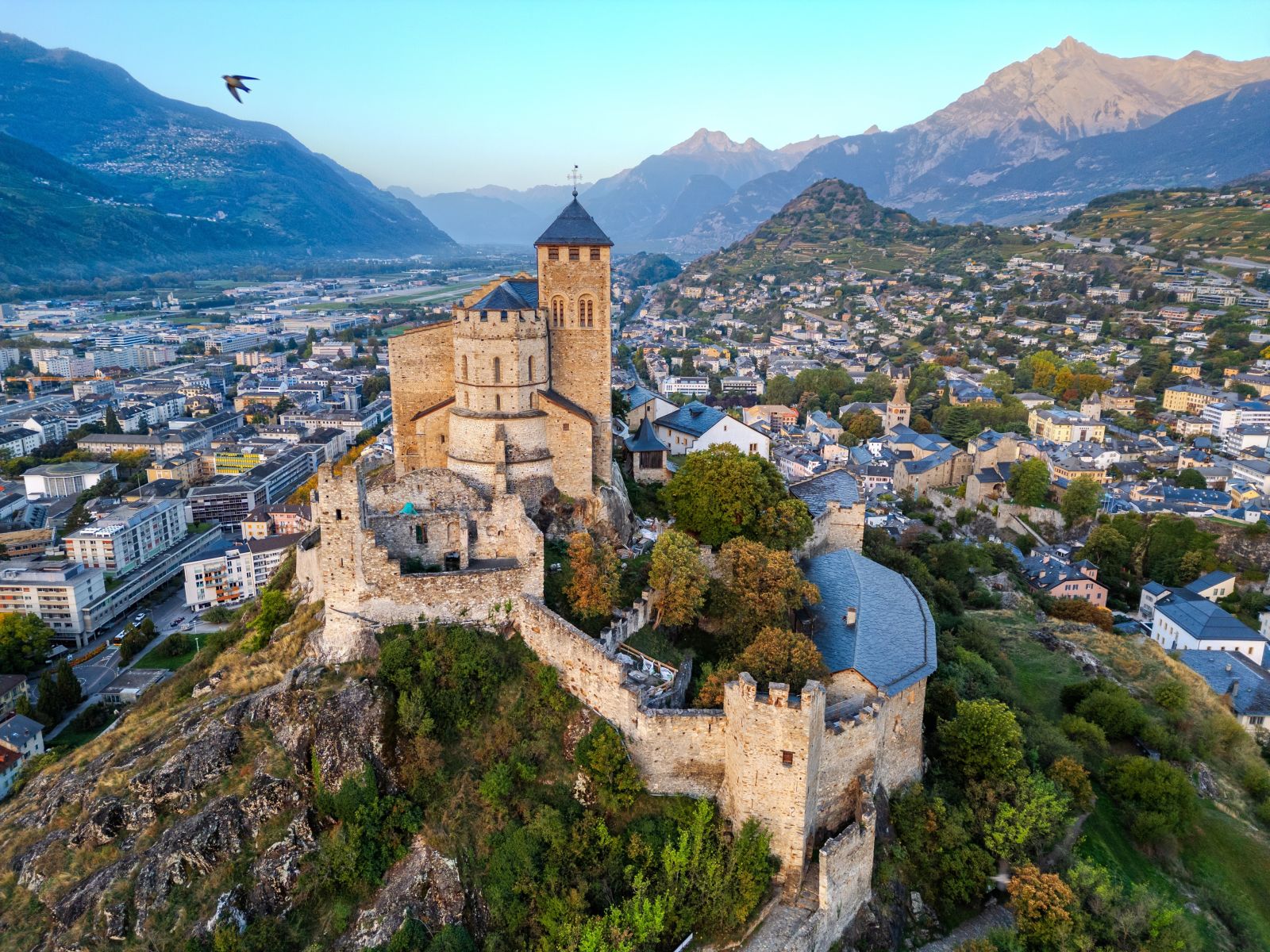
Sion is the capital of Valais, set where the Rhône Valley widens and vineyards climb toward two rocky outcrops crowned by castle ruins. Settlement here reaches back to the late Mesolithic, around 6200 BC, among the oldest traces of continuous habitation in Europe. Tourbillon, built in the 13th century, faces Valère across a narrow gap; the fortified basilica on Valère holds an organ built around 1435, recognised today as the oldest playable instrument of its kind in the world. Sion counts among Switzerland's sunniest towns, with close to 2,200 hours of sunshine a year, second only to Locarno. Below the hills, the old town's Grand-Pont leads past the Cathedral of Notre-Dame-du-Glarier and the Witches' Tower.
What makes Sion slow travel perfect
Sion is built on two rocks. Tourbillon, bare and roofless, held the bishops of Valais through centuries of siege and fire; Valère, its twin across a dry moat, kept a fortified church that never burned down. Inside is an organ built around 1435, restored to playing order in 1954, and still recognised as the oldest playable keyboard instrument of its kind in the world. Every July, ancient music returns to it during a festival built entirely around one instrument.
Below, the town spreads into the Rhône Valley, vineyards running to the edge of the old streets. Sion sits among the driest and sunniest corners of Switzerland, closer in climate to the Mediterranean than to the Alps at its back. Grapes ripen here that struggle everywhere else in the country: Valais produces roughly a third of all Swiss wine, much of it within sight of the two castle hills.
Ten minutes away, near St-Léonard, a boat glides across the largest navigable underground lake in Europe, 300 metres of still water lit only by a guide's lamp. The same limestone valley, opposite conditions, both worth the detour.