A funicular climbing 735 vertical meters, and two lakes appear at once.
Nature
 Koen's favourite
Koen's favourite
Bern region Interlaken
A handcrafted itinerary for Interlaken.
SleepA short, curated list. None of them a chain.
GuidesHand-curated, walked before written.
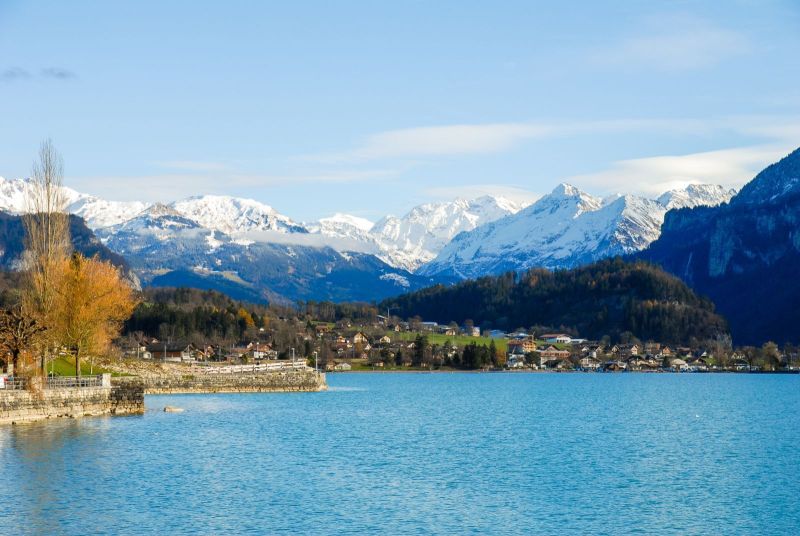
Interlaken lies on a flat strip of land, wedged between Lake Thun to the west and Lake Brienz to the east. The town sits at 568 metres, and is the main gateway to the Jungfrau Region and the peaks of Eiger, Mönch and Jungfrau beyond it.
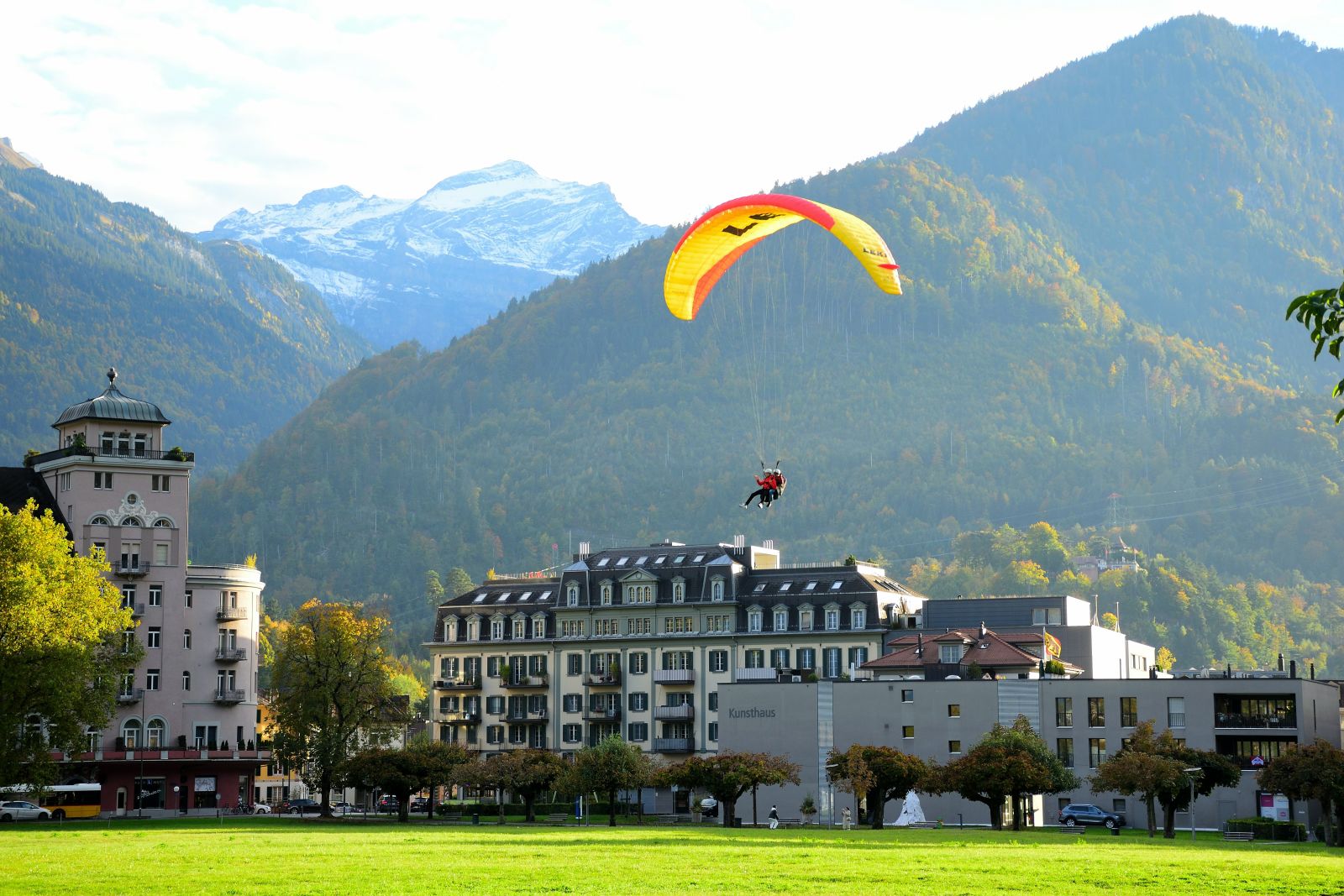
Two railway stations, Interlaken Ost and Interlaken West, connect the town to the mountain railways that climb toward Grindelwald, Lauterbrunnen and the Schilthorn. The River Aare runs straight through the centre, linking the two lakes it's named between. On the Höhematte, the open meadow at the heart of town, paragliders land through the afternoon with the Jungfrau massif behind them.
Höheweg, the main promenade, runs from one end of town to the other, lined with hotels built during the town's nineteenth-century rise as an alpine resort.
A few of our favourite spots in Interlaken.
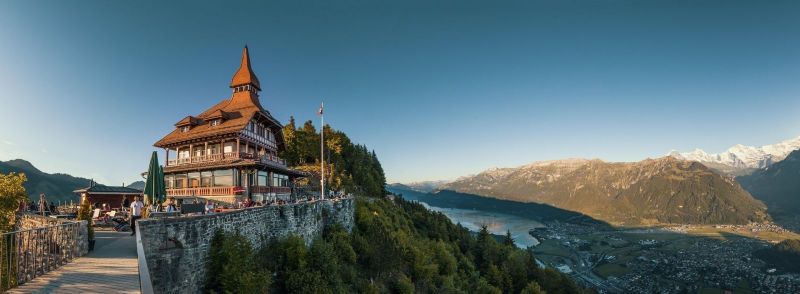
A funicular climbing 735 vertical meters, and two lakes appear at once.
Koen's favourite
A restaurant with a turret and a terrace, and a two-lake view from the table.
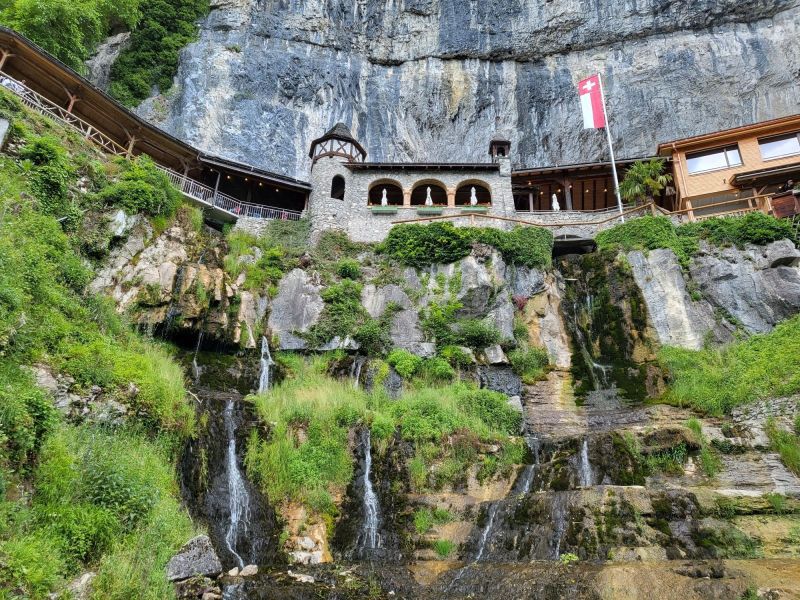
A river runs beneath the mountain, cold and constant, whatever season waits outside.
Ibex on the ridge, the Eiger on the horizon.
Slow strokes, flat water, and Ringgenberg's cliffs sliding past at eye level.
Interlaken is a hinge point, not a destination in itself.
Travellers arrive here because everything else is close: the Jungfrau railway leaves from Interlaken Ost, boats to Brienz and Thun leave from docks a few minutes apart, and Grindelwald or Lauterbrunnen are twenty minutes by train.
That position, between two lakes and beneath three of the Alps' most photographed summits, gives Interlaken a rhythm most alpine towns don't have. People pass through, but they also stay, drawn by the paragliders drifting over the Höhematte at four in the afternoon, or by a walk along the Aare where the water runs a green that looks mixed rather than natural. The town itself is modest. Its value is in what surrounds it: Harder Kulm (Koen's favourite) above, reachable by funicular, gives a view down onto both lakes at once, something few viewpoints in Switzerland manage.
For a base with rail lines running in three directions and lake water on two sides, Interlaken earns its name. It sits between, and that's exactly the point.