Zürich & North Switzerland Schaffhausen
Schaffhausen
Plan your trip
A handcrafted itinerary for Schaffhausen.
SleepFind your stay
A short, curated list. None of them a chain.
GuidesFollow a route
Hand-curated, walked before written.
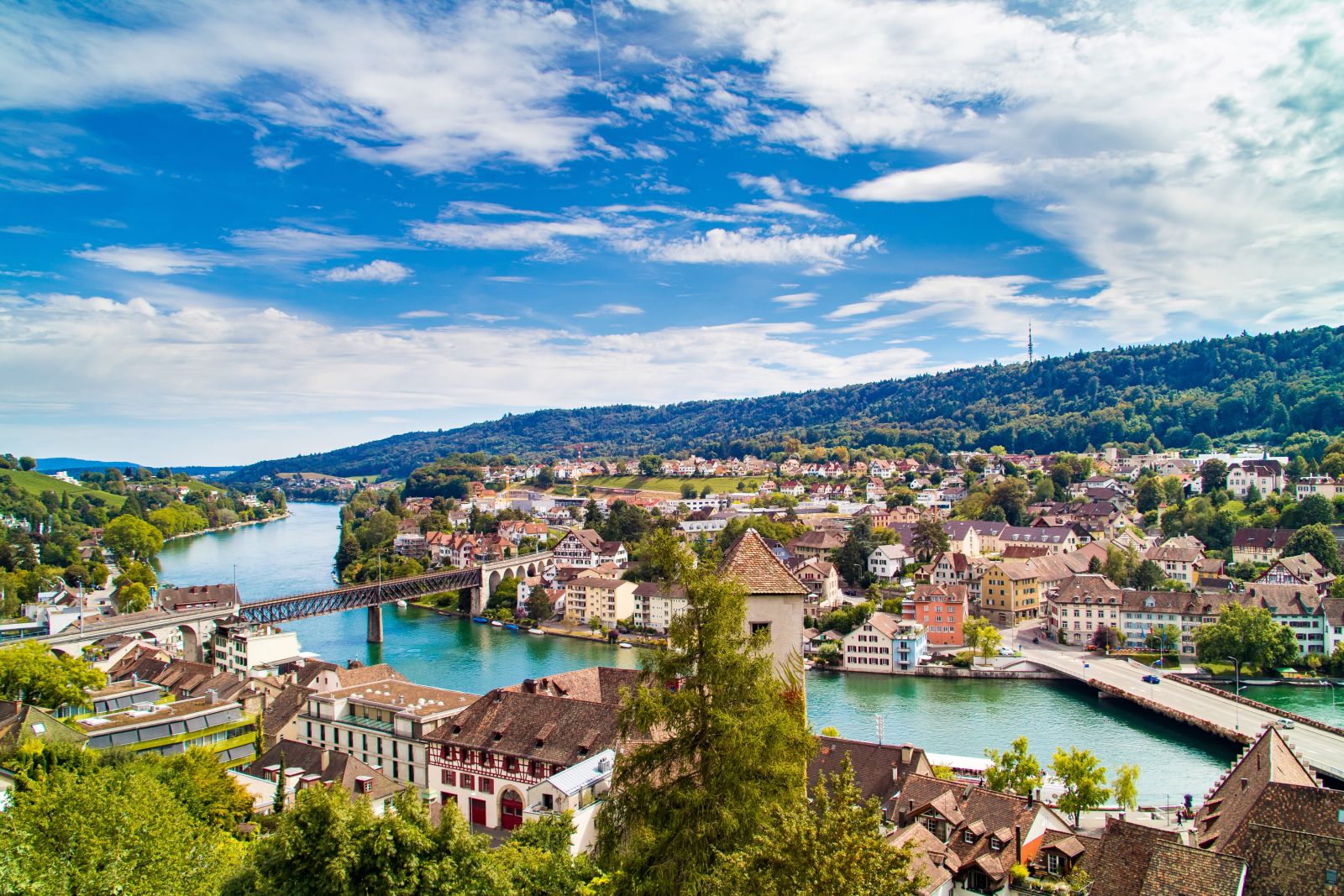
Schaffhausen occupies the northernmost point of Switzerland, where the Rhine curves along the German border before dropping over the largest waterfall in Europe. Medieval merchant wealth built an old town of 171 painted bay windows, still traffic-free today. The Munot, a round 16th-century fortress, watches over both.
What makes Schaffhausen slow travel perfect
Schaffhausen is a border town that turned its geography into craft. Merchants here made their fortune trading grain and salt along the Rhine, and they spent it on their houses: 171 oriel windows, each one carved, painted, or gilded, line the old town's traffic-free streets. Haus zum Ritter still carries its Renaissance mural. Herrenacker, the old town's largest square, fills with the sound of café chairs scraping stone rather than traffic.
Above it all sits the Munot, a circular fortress finished in 1585, ringed by a dry moat and a vineyard on its outer wall. Climb the spiral ramp inside and the view opens over red tiled roofs to the Rhine below.
Ten minutes downstream, the river commits to its most dramatic act. The Rhine Falls drop 23 metres across a 150 metre wide rock shelf, the widest waterfall in Europe. Boats cross close enough to feel the spray. A viewing platform at Schloss Laufen offers the same power from a drier distance.
Beyond the city, the Klettgau hills carry rows of Blauburgunder vines, Schaffhausen's own Pinot Noir. Villages like Hallau and Wilchingen sell it from the cellar door. Downstream, Stein am Rhein waits with its own painted facades, smaller and quieter than Schaffhausen's.
A weekend here moves at the pace of the river: fast at the falls, unhurried everywhere else.