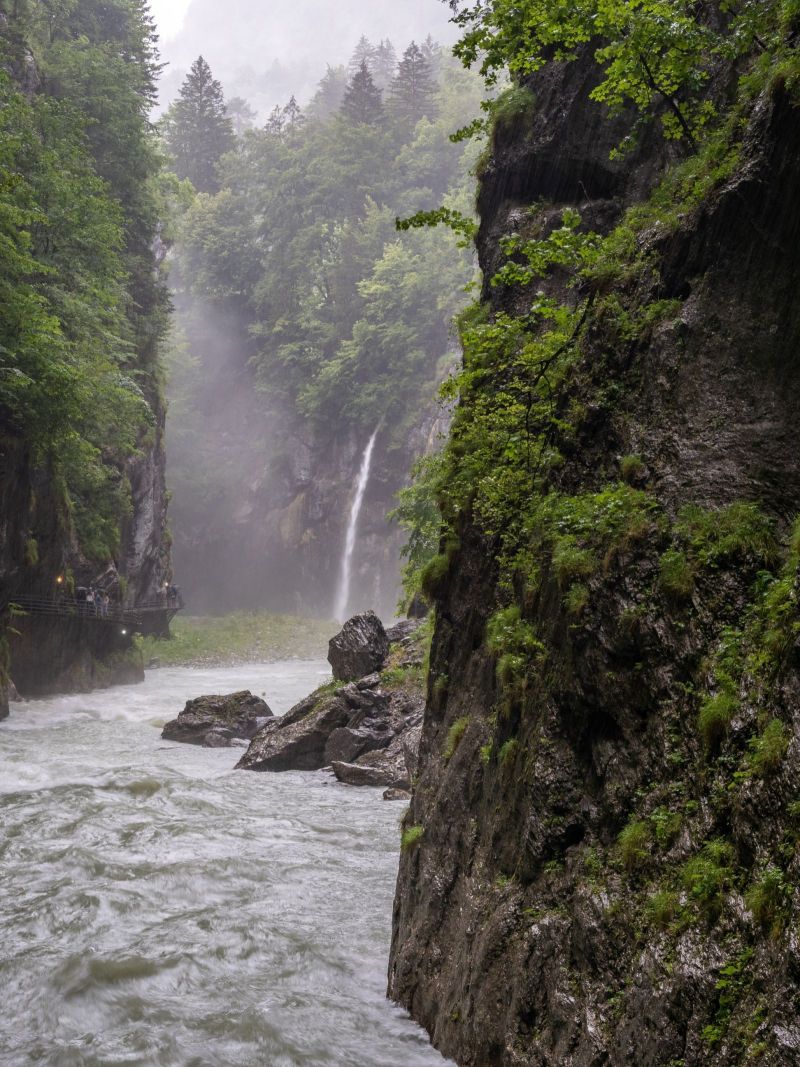
Water carved this corridor stone by stone, and it hasn't stopped since.
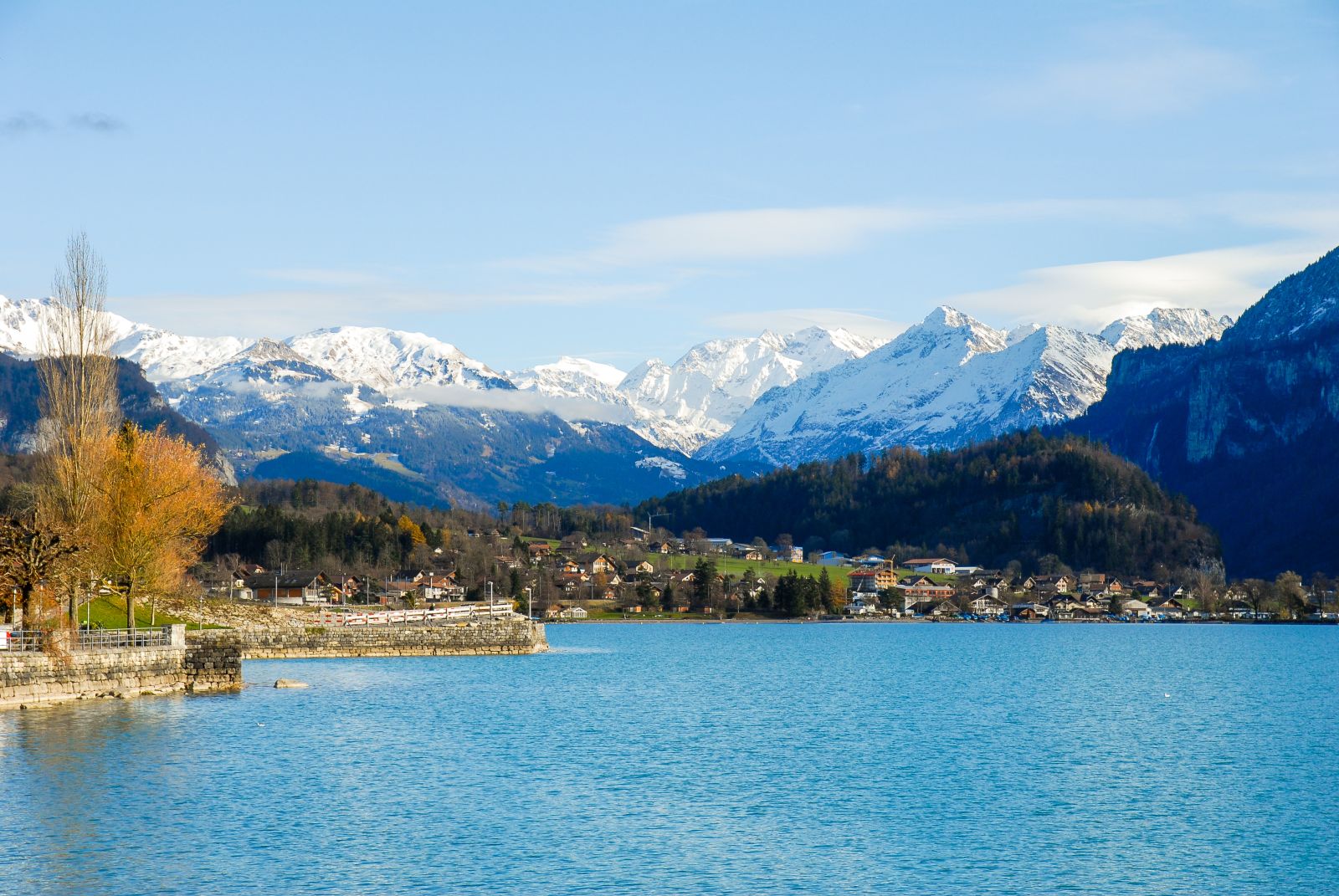
Bern region Brienz
Brienz
Plan
Plan your trip
A handcrafted itinerary for Brienz.
SleepFind your stay
A short, curated list. None of them a chain.
GuidesFollow a route
Hand-curated, walked before written.
Brienz sits on the northern shore of Lake Brienz in the Bernese Oberland, where cobbled Brunngasse cuts through rows of wooden chalets decorated with flowers and carvings.
The village is listed in the Inventory of Swiss Heritage Sites. Since 1892, the Brienz Rothorn Railway has carried visitors by steam cog train to the 2,350-metre summit of the Brienzer Rothorn, where the Bernese Alps, Lake Brienz, and the Grimsel area open up in one view.
Woodcarving is not a museum piece here. It is a trade, visible on the Schnitzlerweg trail above the village on Axalp, and in workshops that still turn spruce and linden into figures by hand.
Things worth slowing down for
A few of our favourite spots in Brienz.
Slow strokes, flat water, and Ringgenberg's cliffs sliding past at eye level.
What makes Brienz slow travel perfect
Brienz is what happens when a place keeps a skill alive instead of packaging it. The lake itself explains part of the pull. Its water carries a deep emerald green, caused by fine glacier particles suspended in the current, and even in August most people only look at it rather than swim in it. A kayak or a jetboat crossing gets closer to that colour than any photograph.
The paddle steamer Lötschberg still works the lake on breakfast and sunset cruises, a reminder that this was a transport route long before it was a view. Above the shoreline, the woodcarving tradition runs deeper than souvenir shops suggest. Families have carved in Brienz for generations, and the Schnitzlerweg trail on Axalp turns that craft into a walk, with carved figures marking the path toward the small Hinterburgseeli lake. Ten minutes away, the Ballenberg Open-Air Museum rebuilds farmhouses from across the country, plank by plank.
Yet, the clearest way to understand Brienz is still the Rothorn line: a steam engine from 1892, one hour of climbing, and a summit where three of the country's most photographed peaks, the Eiger, Mönch, and Jungfrau, appear without a filter.